


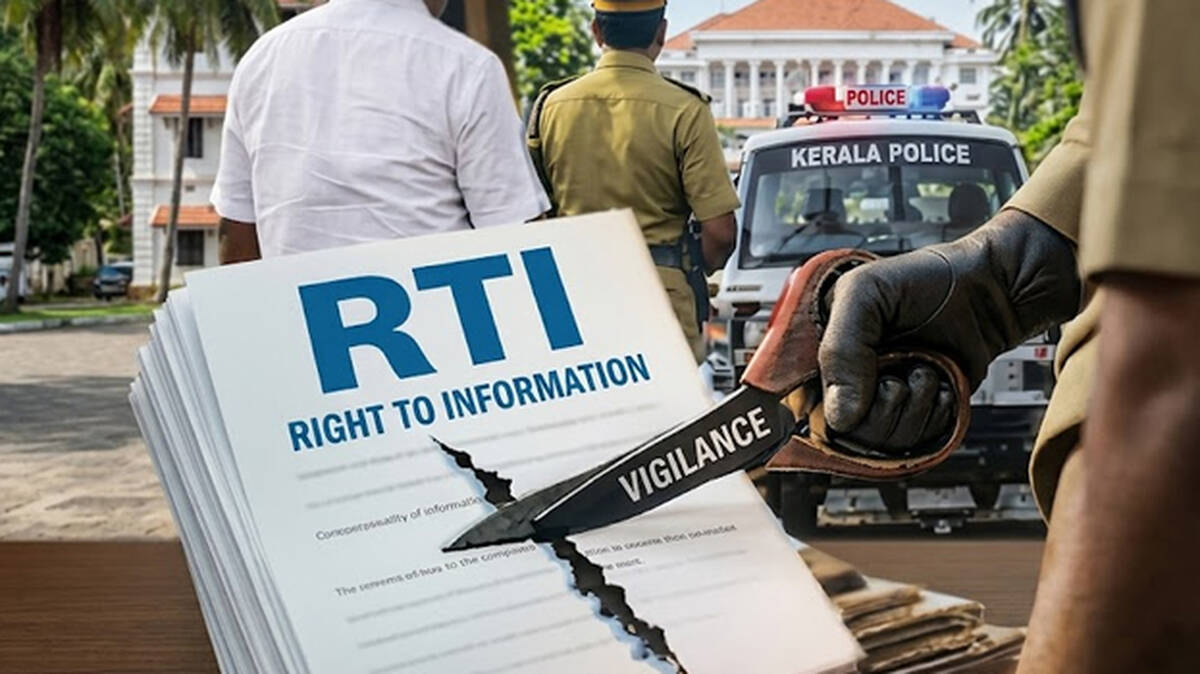
THIRUVANANTHAPURAM: Sensitive information held by the Vigilance Department, which investigates corruption cases, will no longer be disclosed under the Right to Information (RTI) Act. Of the 32 sections in the Vigilance wing, T-1 and T-2 have been exempted from the purview of the Act. Investigation reports and other information handled by these two sections will no longer be available under RTI.
The Vigilance chief can decide which cases should be transferred to these sections. The move has drawn criticism, with allegations that it is a strategy to prevent information about cases against prominent figures, including political leaders and ministers, from becoming public. The Vigilance Department explained that the exemption was intended to prevent confidential records relating to investigations, including procurement-related corruption and irregularities in tenders, from being disclosed.
When the RTI Act came into force, the T-section had been excluded from its purview on the grounds that its records were confidential. When Loknath Behera became Vigilance Director, the section was brought under the RTI Act. It has now been exempted again. The T-sections in the police headquarters, Crime Branch and Intelligence Wing had already been exempted from the RTI Act.
The T-1 section maintains and handles the annual confidential reports of ministerial, executive and legal personnel in the Vigilance Department, personal files of high security importance, and documents of an extremely confidential nature.
The T-2 section processes the weekly diaries of Vigilance officials and handles crucial source reports.












 HOME
 LATEST
 NOTIFIED NEWS
 POLL
 KERALA
 EDITORIAL
 INDIA
 WORLD
 BUSINESS
 CINEMA
 SPORTS
 LIFESTYLE
 SPECIAL
 SCIENCE & TECHNOLOGY

 |