

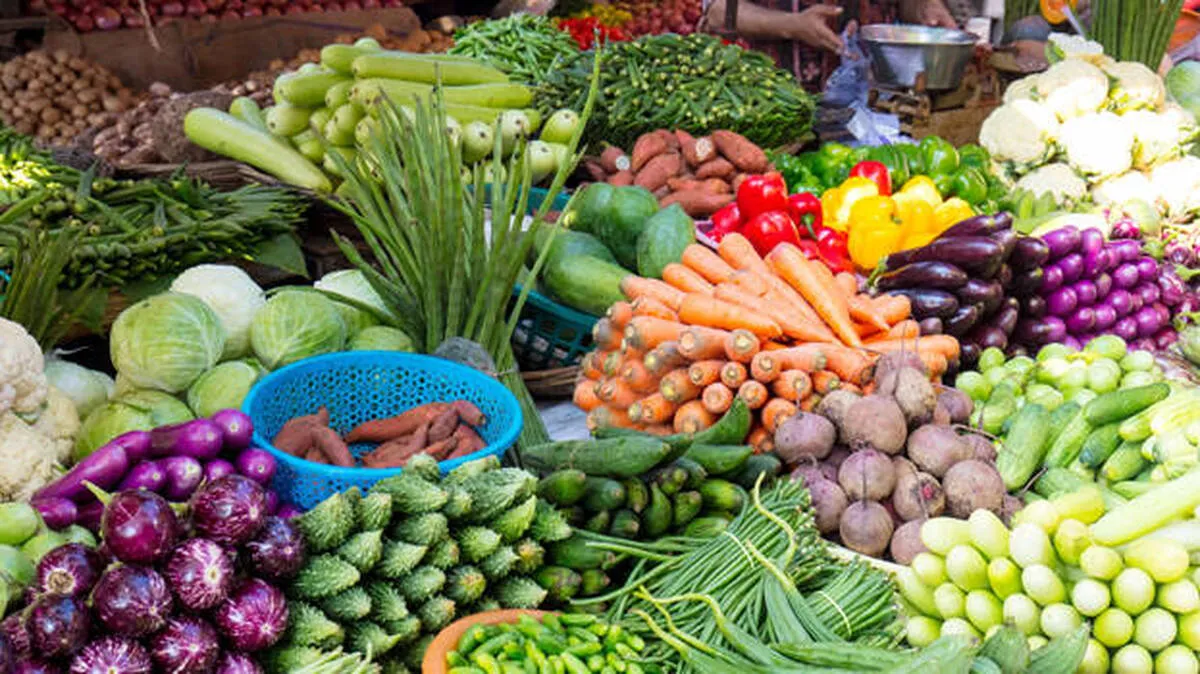
KOZHIKODE: Expanding vegetable cultivation by an additional 20,000 hectares can help Kerala achieve self-sufficiency and eliminate the influx of toxic vegetables from neighboring states, according to agricultural scientists.
Vegetable farming currently spans 50,000 hectares during a single season, utilizing only four percent of the state's total cultivable land. Kerala produces 1.7 million tonnes (17 lakh tonnes) of vegetables annually against a total requirement of 3.67 million tonnes (36.7 lakh tonnes). The state also faces a severe seed deficit, requiring 120 tonnes of seeds annually while receiving only 24 tonnes.
Recommendations issued years ago by an expert committee of the State Planning Board were not pursued with significant effort by the authorities. Officials allegedly favored hybrid seeds from private companies, leading to the failure of a Department of Agriculture initiative to produce hybrid seeds with the assistance of the Kerala Agricultural University. The report noted a critical lack of coordination among agriculture-related departments.
Native Kerala crop varieties—such as kanivellari, cherukumpalam, padavalam, mathan, and nadan mulak—lack hybrid seed availability, and those available command exorbitant prices. However, the Agricultural University maintains hybrid seeds for bitter gourd (paval), ridge gourd (peechinga), cucumber (kakkiri), watermelon (thannimathan), and brinjal (vazhuthana).
To bridge the production gap, experts have recommended utilizing fallow land, promoting rooftop farming, adopting integrated pest management, and implementing precision farming. In urban areas, mineral-based soilless cultivation like hydroponics can be adopted, while backyard cultivation of drumstick and curry leaves can be expanded. Summer watermelon cultivation can also be promoted in paddy fields through Kudumbashree units. Output can be more than doubled through advanced techniques such as plastic mulching, drip irrigation, and fertigation.
Farmers continue to face severe operational hurdles, including market instability, unorganized markets, a lack of financial security, pest and disease infestations, and a shortage of proper storage facilities.
Dr. T. Pradeep Kumar, an ICAR emeritus professor at the Agricultural University, emphasized that vegetable production can be substantially increased through the effective use of hybrid seeds.













 HOME
HOME LATEST
 NOTIFIED NEWS
 POLL
POLL KERALA
  EDITORIAL
  INDIA
INDIA  WORLD
WORLD  CINEMA
  SPORTS
  LIFESTYLE
  SPECIAL
  SCIENCE & TECHNOLOGY
 |
|