

NEW DELHI: By accepting the resignation of Union Education Minister Dharmendra Pradhan, the Modi government appears to have moved to defuse a political crisis that had been steadily escalating across the country. Although Parliament's Monsoon Session began on June 20, it had failed to function normally even for a single day, with the Opposition insisting that discussions could begin only after Pradhan stepped down. The deadlock severely disrupted the government's legislative agenda, preventing the introduction of several key Bills.
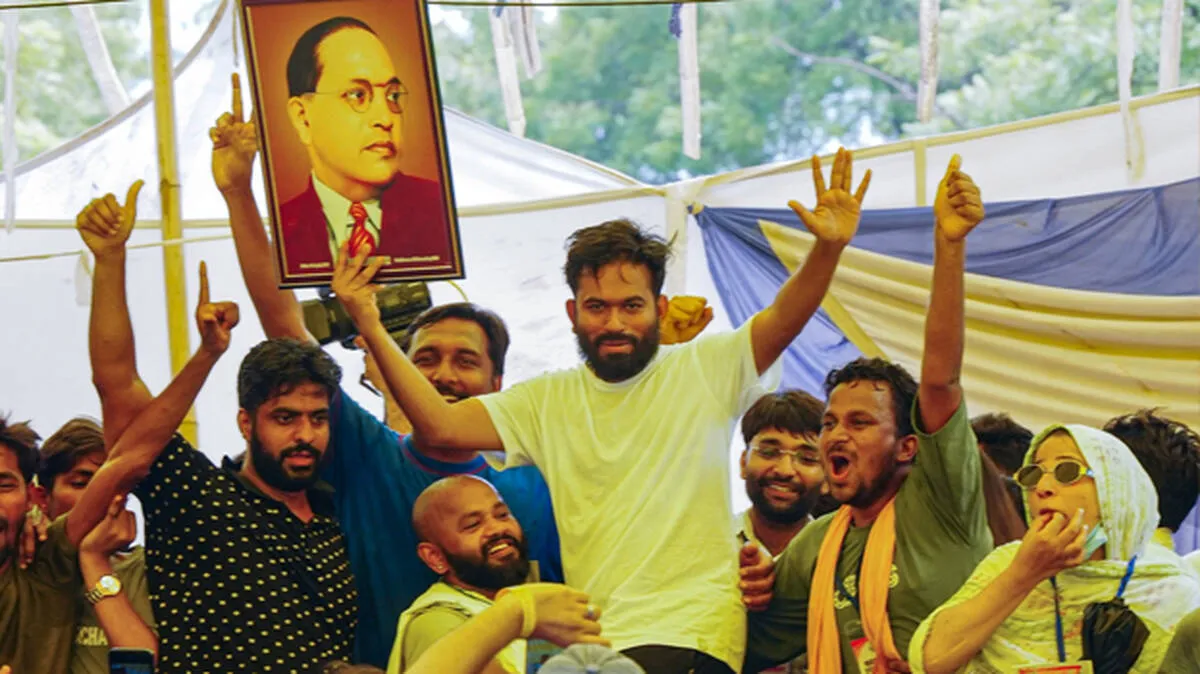
The government also concluded that the Opposition was attempting to escalate the issue beyond Parliament. The July 20 CJP march to Parliament, which turned parts of Delhi into a battleground, gathered further momentum after Leader of the Opposition Rahul Gandhi personally joined the protests. Security agencies were taken aback the following day when Rahul led an unprecedented sit-in outside the Prime Minister's official residence at 7, Lok Kalyan Marg.
What particularly alarmed the government was the Opposition's willingness to carry protests into high-security zones. On July 23, Opposition MPs also defied restrictions to stage demonstrations at Gandhi Smriti at 5 Tees January Marg. Intelligence agencies warned the Centre that the agitation could trigger widespread disturbances in the national capital and elsewhere if allowed to escalate, prompting Prime Minister Narendra Modi to intervene personally.
JP Nadda and Jitendra Singh were deputed to negotiate with the protesters. During a second round of talks on Friday, they assured demonstrators that a decision on Pradhan's future would be taken within 24 hours. The ministers later conveyed the protesters' demands to Modi, who is understood to have consulted senior members of the Cabinet and the BJP before asking Pradhan to step down. With the RSS also no longer backing him, Pradhan submitted his resignation, which was swiftly forwarded to Rashtrapati Bhavan.
July 23: Modi announced the establishment of fast-track courts to ensure speedy punishment for those involved in the question paper leak. Higher Education Secretary Vineet Joshi was replaced by Naresh Kumar Gangwar, while Kerala cadre officer T.K. Anil Kumar was appointed School Education Secretary. At 11:52 p.m., Modi released an unusual late-night selfie video, saying the Union Cabinet would take tough decisions and consider legislative measures.
July 24: Modi intervened to end Sonam Wangchuk's hunger strike. Later in the day, Union ministers JP Nadda and Jitendra Singh held talks with CJP spokespersons Sourav Das and Ashutosh Rank, assuring them that a decision on Pradhan's resignation would be announced the next day. The Union Cabinet approved amendments providing for up to 10 years' imprisonment and fines of up to ₹100 million for those convicted in the question paper leak case. Forty-seven officials were dismissed from the NTA.
July 25: The Centre accepted all the CJP's demands, including Pradhan's resignation, following which the agitation was withdrawn.






 HOME
HOME LATEST
 NOTIFIED NEWS
 POLL
POLL KERALA
  EDITORIAL
  INDIA
INDIA  WORLD
WORLD  CINEMA
  SPORTS
  LIFESTYLE
  SPECIAL
  SCIENCE & TECHNOLOGY
 |
|